

































Survey Finds 75 Million Americans Are Driving With Vision They Know Isn't Good Enough [2026]




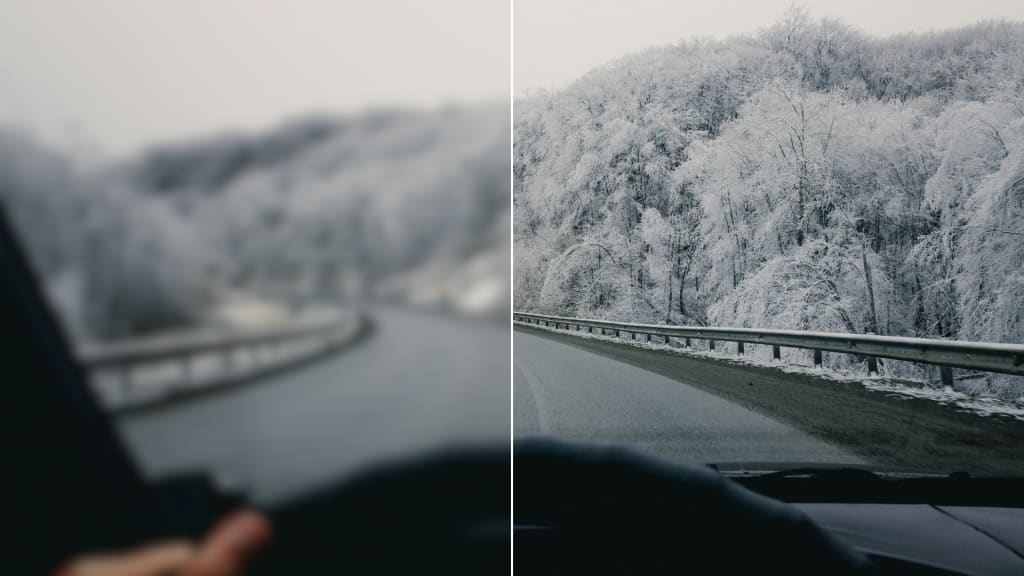
Most drivers assume their car is the weak link - the brakes, the tires, the weather, the other guy. Very few stop to ask whether the real problem might be their own eyesight.
Yet across the country, a surprising number of people are getting behind the wheel even though they haven’t had their vision checked in years.
Following our survey of over 3,000 drivers, it has become apparent just how common that quiet neglect has become.
Key Findings
Perceived high cost is a significant factor.
Our study found that the number one reason for avoiding eye tests is money: 36% said cost is the main barrier, as it appears eye care is becoming a casualty of rising living expenses.
But it's worth remembering that essential care doesn’t have to be a financial burden. At Lenspricer, we help make it easy to find discount contact lenses online, ensuring that cost is no longer a barrier to seeing clearly and staying safe on the road.
Most people agree stricter rules would make roads safer - even if they are part of the problem.
The 82% who support tougher vision-related driving requirements signal something interesting: people know eyesight matters more than their habits reflect. It’s one of those topics where public opinion and personal behavior don’t quite match.
A lost pair of glasses becomes a behavioral test, not a medical one.
When asked what they would do if they misplaced their glasses before driving, the split is telling. 20% would drive anyway - a number that’s hard to ignore.
Another 12% would postpone the trip, and 12% would limit themselves to short distances.
The most cautious group (38%) would hand the keys to someone else. And 18% don’t use corrective lenses at all, which may explain some of the confidence among the first group.
Near-misses are more common than people admit out loud.
Almost a quarter (24%) say they have had more than one close call they believe was linked to their vision. It's one of those statistics that doesn’t need embellishment - the number speaks for itself.
When eyesight gets worse, people split into five psychological camps.
At one end, 6% say they would keep driving no matter what, and 14% think they probably would too. In the middle, 42% would drive less as their sight declines.
At the cautious end, 34% say they would stop entirely. Another 4% simply don’t know - which is its own kind of answer.
Denial plays a quieter role - but it’s still there.
A full 29% admit they have avoided renewing their glasses because they didn’t want to acknowledge their eyes are getting worse. That number doesn’t scream vanity; it feels closer to the quiet resistance people have toward any reminder that their body is changing.
Final Thoughts
What stands out in these numbers isn’t just how many people put off eye tests - it’s the quiet, everyday logic behind it. Most drivers aren’t acting out of recklessness; they are juggling cost pressures, busy schedules, and a sense that their vision is “fine enough” to get by.
But that mix of confidence and compromise shows up everywhere in the data: the people who would still drive without their glasses, the quarter who have already had a near-miss, the sizeable group who admit they are avoiding new lenses because they don’t want to confront the fact that their eyesight is changing.
Collectively, our study paints a picture of a country that understands the risks - 82% of drivers believe stricter vision requirements would make roads safer - yet many still treat eyesight as something that can be dealt with “later.”
It doesn’t have to be that way. Regular eye care doesn’t need to be expensive or complicated, and even small steps can make a meaningful difference behind the wheel.
The figures are a reminder that driving becomes significantly safer when we treat our vision with the same everyday urgency as filling up the tank - something we aim to make easier and more accessible for everyone.